 BANARTA
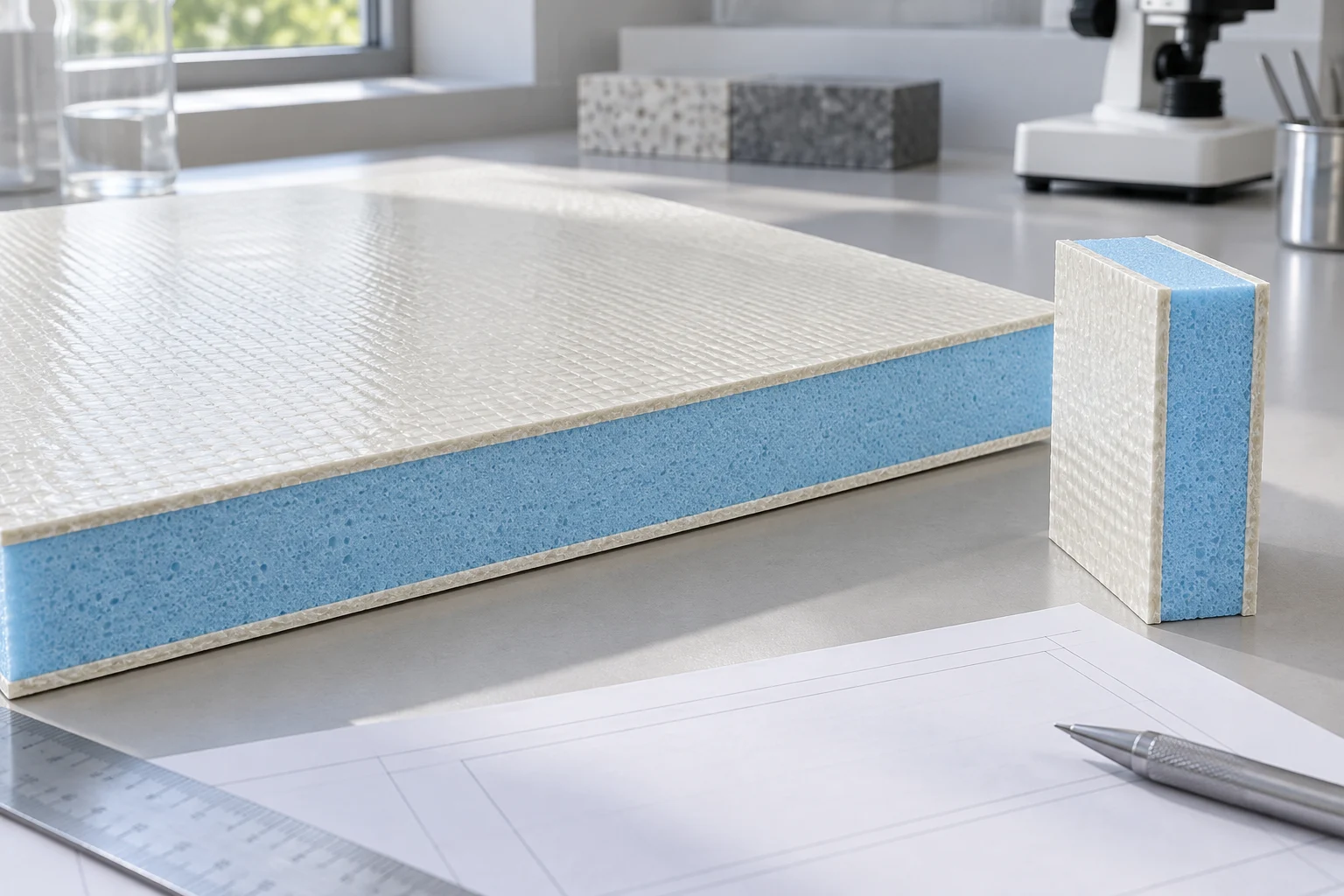
Record what you can see, isolate uncertain panels and obtain a technical decision before use. A lifted face, damaged edge or unusual surface does not by itself identify the cause or extent of a bonding problem. Receiving inspection should preserve traceable evidence rather than turn a visual observation into an unsupported diagnosis.
Check the delivery against the agreed order
Start with the packing list, approved construction and drawing revision. Identify each pack, panel type and batch. Record quantity and external packaging condition before unpacking hides the original arrangement. Keep transport labels linked to the affected pieces.
For fabricated components, confirm the part number and face orientation as well as dimensions. A correctly sized piece with a reversed outside face or an outdated opening can still be the wrong component.
Use a receiving log with separate decisions
| Observation | Record | Next action |
|---|---|---|
| Crushed packaging or impact mark | Pack ID, location, photographs and affected count | Inspect related pieces and follow the agreed reporting process |
| Edge chip or exposed core | Position, dimensions and part identity | Hold against the agreed acceptance criteria |
| Face lift or suspected bond separation | Visible extent and conditions; avoid guessing the cause | Isolate and request supplier/technical assessment |
| Size, flatness or finish concern | Measurement method and comparison with approved tolerance | Resolve acceptance before fabrication or installation |
Take photographs that can be interpreted later
Use an overall pack view, a full-panel view and a close view with an appropriate scale. Record which face is shown and where the condition lies relative to an identifiable edge. Avoid photographs that show only a close-up with no link to a panel number.
A useful issue description is specific: “Panel P-07, Face A, visible lifting at the upper right corner; approximate extent recorded in photograph 04.” “Bad panel” provides little basis for investigation. Record the observed condition separately from a suspected explanation.
Do not create a repair before agreeing a disposition
Cutting, peeling, gluing or installing the affected area may change the evidence and make later assessment harder. Keep uncertain material identified and protected under the applicable handling instructions. Ask whether further sampling, testing or inspection is needed before release.
A tap or hand check is not a universal acceptance test for every sandwich construction. If the order requires bond testing, agree the method, sample selection and acceptance criteria with the relevant technical parties. This guide does not supply a pass/fail limit or certify that a visually clear panel is defect-free.
Close the issue with a written outcome
- Accepted against the agreed criteria.
- Held for additional assessment.
- Repair approved with a defined method and responsibility.
- Replacement or another agreed commercial disposition.
Keep the decision linked to the affected quantity, photographs and panel identities. Check the delivery and reporting terms promptly, since the relevant process and timing come from the order agreement. Do not mix held pieces back into accepted stock without recording their release.
Prepare these requirements before purchase
Use the FRP supplier qualification guide or PVC-faced panel procurement guide alongside the panel range. Discuss packaging and acceptance requirements before the order is released. This is a proposed receiving workflow, not evidence of a Banarta defect, test result or warranty commitment.